"Today's Sebeș is a city where everyone wants to stay. Here, unemployment doesn't exist — economic development is a reality."
— Municipality of Sebeș
Sebeșul.ro is an informational portal dedicated to the Municipality of Sebeș — a city with over 800 years of history, located in the heart of Transylvania, at the junction of the A1 (Nădlac–Bucharest) and A10 (Sebeș–Turda) motorways. Here you will find a complete overview: from the transport infrastructure that transformed the city into a European logistics hub, to the €2 billion+ industrial investments, medieval history, and tourist opportunities in the area.
The portal covers the achievements of local administration in recent years, the area's energy potential, major ongoing projects — from the 90M lei bypass road to the €25M Intermodal Terminal — and the strategic role of Sebeș in NATO defense architecture through Centre 346 CTI.
Over €2 billion cumulative investment. Star Assembly (Mercedes-Benz, €700M+), Kronospan (€600M+), and an ecosystem of 1,200+ active firms. Romania lowest unemployment — 2%. Public investment grew 16-fold between 2016 and 2023.
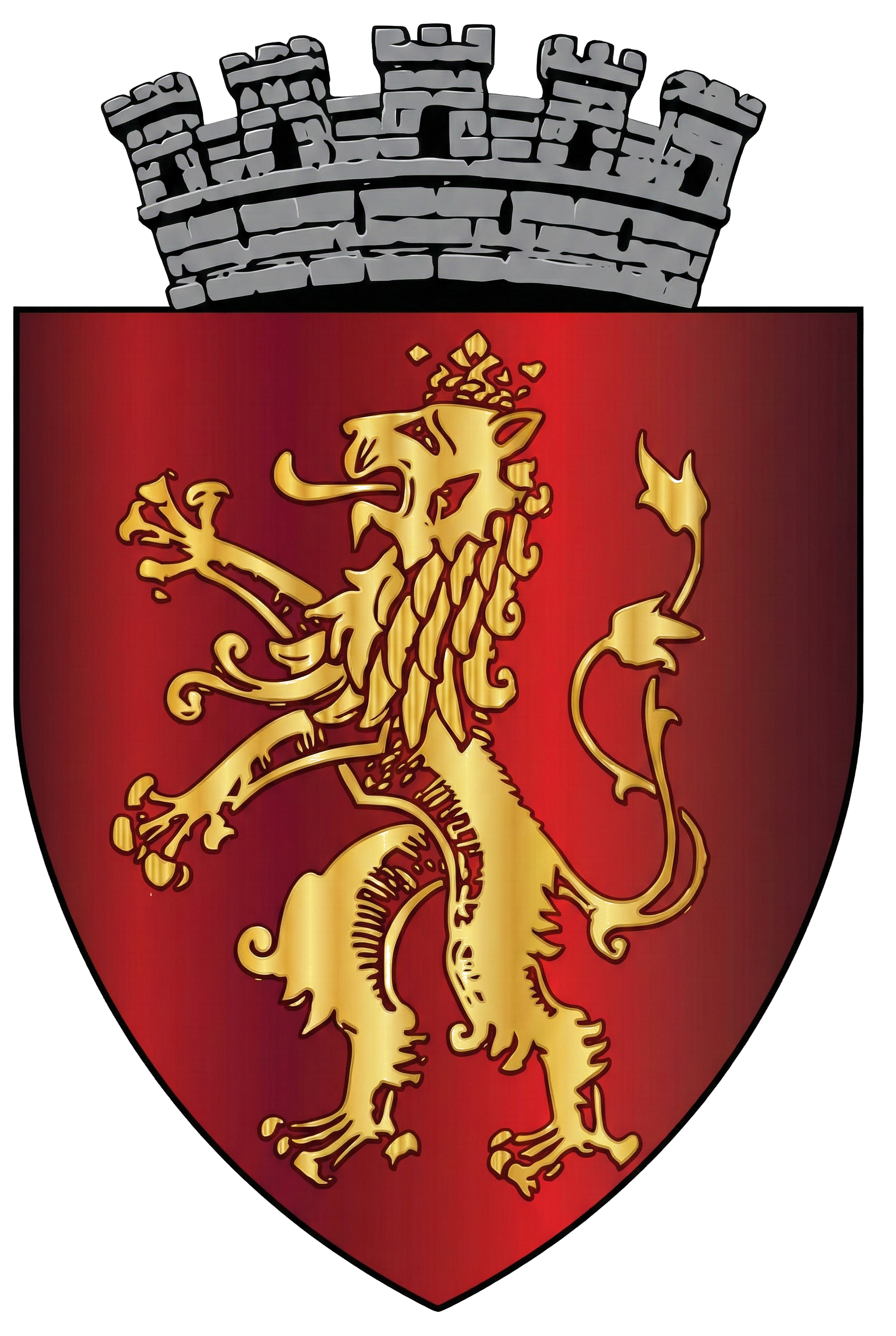
First Transylvanian town authorized to build a stone fortress (1387). The 13th-century Evangelical Church, Câlnic Fortress (UNESCO), Râpa Roșie — a canyon unique in Europe. The golden rampant lion coat of arms dates from the 1520s.
A1×A10 motorway junction — unique in central Romania. Intermodal Terminal (100,000 TEU/year, 2026). A1 Sibiu–Pitești (€4.46B) under construction. 346.5 MW hydropower system and 77+ MWp photovoltaic parks.
In 2016, the municipality of Sebeș had a budget of around 50 million lei and zero non-repayable funding. Today we achieved a 16-fold increase in investment: from 6.4 million lei per year to 104 million lei in 2023. The results are visible in modernized streets, new schools and kindergartens, medical services and investments that improve people's lives.
Mayor, Municipality of Sebeș
Sebeș was the first Transylvanian town authorized to build stone defense walls (1387), and its coat of arms with the golden rampant lion dates from the 1520s.
Until 2014, Sebeș was synonymous with traffic jams on DN7. Today, the city is the junction of two major European motorways.
Pan-European Corridor IV (Nădlac–Bucharest–Constanța). Orăștie–Sebeș section operational since 2014. Sibiu–Pitești completion (€4.46B) will provide direct link to Bucharest.
Sebeș–Turda: 70 km completed in 2021. Includes Muntele Mare Tunnel (3,595m) — Romania's longest road tunnel. Direct link to Cluj-Napoca and, via A3/A8, to Oradea.
Curtici–Bucharest mainline, inaugurated 1897. 5 railway tracks, direct connection to the industrial zone. Modernization and electrification planned (€0.3B).
| Destination | Distance | Drive Time | Route |
|---|---|---|---|
| Sibiu (Airport) | 50 km | 35 min | A1 |
| Alba Iulia | 18 km | 20 min | DN1 |
| Cluj-Napoca (Airport) | 130 km | 1h 15min | A10 |
| Timișoara | 220 km | 2h 20min | A1 |
| București | 330 km | 4h * | A1 + DN7 |
| Târgu Mureș | 110 km | 1h 30min | A10 + E60 |
| Oradea (Airport) | 250 km | 2h 45min | A10 + A3 |
| Budapesta | 530 km | 5h 30min | A1 + M1 |
* After A1 Sibiu–Pitești completion: ~3h
The motorway junction extends over approximately 5 km and includes three overpasses over A1, two over the railway, and a major overpass over the Sebeș river and the old DN1/E81 at Lancrăm. This infrastructure freed the city from transit traffic (46,000 vehicles/day on DN1) and created the conditions for massive industrial development.
With over €2 billion cumulative investment, 1,200+ active firms and Romania's lowest unemployment (2%), Sebeș is a model of local economic development.
Sebeș hosts a diversified economic ecosystem. Active sectors include: automotive (transmission components), wood processing, food industry (including ice cream production), construction, IT and services. Over 1,200 companies are registered in the city.
Since 2016, local administration has secured over 310 million lei in signed non-repayable contracts, plus projects under evaluation totaling 449 million lei. Public investment grew from 6.4M lei/year to 104M lei in 2023.
Parcul Arini Nursery — 11.8M lei from PNRR, 40 places, solar panels, completed ahead of schedule. Aleea Parc nursery+kindergarten — 8.5M lei, 74 places. New Technical High School — 40M lei, dual education with automotive industry.
Western bypass — 90.6M lei, 5.5 km. Augustin Bena × Kogălniceanu roundabout — 3M lei. Turn intersection redesign. Public lighting modernization for Sebeș, Lancrăm, Răhău, Petrești. Sustainable urban mobility.
Water & sewage network extension — 2.77M lei from EU funds. Public building energy efficiency — Elderly Care Home. Subsidized public transport for students.
Urban Forest — 1.59M lei, 10,260m². Renovated parks, new playgrounds (Răhău). Covered sports field with floodlights at Kogălniceanu School. Covered didactic swimming pool (CJ Alba partnership).
Day centers for elderly, adults and children with disabilities. Elderly Care Home modernization. "Through Education Towards Vocation" project (EEA/Norway Grants). "Together We Give Joy" campaign.
Investment grew 16× (6.4M→104M lei, 2016→2023). 40% of budget supported by local business. Signed non-repayable contracts: 310M lei. Projects under evaluation: 449M lei. Solid, balanced budget.
My only policy is to value the people of Sebeș and provide them with quality public services. The rest follows naturally, through projects and consistency. We proved that non-repayable funding works — today's balance: 310 million lei in signed contracts, plus 449 million lei in projects under evaluation.
Mayor, Municipality of Sebeș
The strategic direction of the Municipality of Sebeș is built on attracting non-repayable funding, investing in educational and social infrastructure, and partnerships with the private sector. This administrative model transformed a 50M lei budget (2016) into a development engine with annual investments exceeding 100M lei.
We set out on a path with many projects, proved that non-repayable funding provides efficient solutions. We invest in health and education. We replaced dust and weeds with grass and flowers, planted trees to take root.
We don't inherit positions, we're not eternal in these roles — we serve the community's interests only temporarily. Let us have the wisdom to stand before people for as long as it is our time and place.
The key to success comes from strategic thinking, perseverance, but above all the long-distance team, the energy of those who believe in the success of projects. We proved together that it can be done.
The greatest wealth of Sebeș is its people. Good deeds keep us together on the right path!
The Sebeș area benefits from remarkable energy potential through hydroelectric plants on the Sebeș River and Mureș tributaries. The Sebeș hydropower system has an installed capacity of 346.5 MW, and photovoltaic parks in the area have a total capacity exceeding 77 MWp.
The city is a strategic distribution point in the national energy grid, benefiting from proximity to major Transelectrica transmission lines that cross the A1 corridor.
From medieval UNESCO fortresses and the Râpa Roșie canyon to Transalpina — Romania's highest road, skiing at 2,060m, Râmeț Gorges, and Alba Carolina Citadel: all within an hour's drive.
11 slopes over 18 km, max altitude 2,060m. 82 km from Sebeș. Valea Sebeșului expansion project with 16 km new slopes (€30M).
Romania's highest road (2,145m at Urdele Pass). Starts from Sebeș, 148 km through the Parâng Mountains. Inaugurated by King Carol II in 1935.
Romania's largest Vauban-style citadel, just 18 km away. Unification Museum, Coronation Cathedral, daily honor guard. Alba Iulia — "The Other Capital".
Râmeț Gorges — 150 ha nature reserve, cable crossings, caves. Lake Oașa — 441 ha, 91m dam, fishing and kayaking.
Lancrăm — birthplace of poet Lucian Blaga, 5 km away. Rimetea — one of Romania's most beautiful villages, at the foot of Piatra Secuiului.
Scărișoara Glacier — Romania's largest underground glacier. Vânătările Ponorului — spectacular karst formations. All under 100 km away.
The Sebeș River was called "Frumoasa" (The Beautiful) by locals. The valley offers waterfalls, hidden clearings, spring water and green forests. Access via DN 67C towards Oașa — a corner of paradise described by Sadoveanu.
15th century, raw river stone, 4 levels. Named after the "student from Romos", a Turkish captive from 1438 whose account became the first Romanian incunabulum (Rome, 1475).
84 km from Sebeș, on the shores of the reservoir. Luncile Prigoanei, Gate of Heaven and Iezerul Șureanu (1,850m alt.) complete a mystic landscape at the mountain border.
Just 5 km away, in Lancrăm — birthplace of the great poet and philosopher. His grave, statue, and the spectacular Râpa Roșie as backdrop. A cultural pilgrimage site.
Europe's oldest precious metal mining tradition. Over 100 km of Roman galleries, chiseled by hand. UNESCO site, ~95 km from Sebeș.
Romania's largest karst lake, at 925m altitude. Crystal-clear waters, underground feeding, lakeside cabin. Part of Natura 2000 Trascău site, ~45 km away.
Sebeș is the ideal base for exploring central Transylvania. At the A1×A10 motorway crossroads, you can quickly reach the most important tourist attractions in Alba County and neighboring counties.
Sebeș has been a strategic point of Transylvania throughout its history. From the medieval fortress with 8 defense towers, through the modern military garrison, to its current role in NATO architecture — the city has always been at the crossroads of defense.
First Transylvanian town authorized to build a stone fortress (1387). 1.6 km walls, 8 defense towers maintained by guilds, 4 access gates. Built from raw river stone bonded with lime mortar, the fortress made Sebeș one of the 7 fortresses of medieval Transylvania (Siebenbürgen). 4 towers remain: Student's, Octagonal, Semicircular and Cobblers'.
In 1438, Sultan Murad II devastates southern Transylvania. Sebeș is besieged, pillaged and burned. Young Christian Cloos (16, from Romos) is held captive for 20 years. His account — "Treatise on Turkish customs" — appears in Rome in 1475 and becomes the first Romanian incunabulum, printed in 25 editions by 1560.
Founded in 1972 (UM 01760), communications and IT hub of the Romanian Army. 8 barracks (6 in Sebeș, 2 in Sibiu), area of responsibility spanning 5 counties. Subordinate to Base 42 CTI "Gen. Traian Moșoiu" Râșnov. Participates in NATO exercises: CISEX, Cetatea, Someș. Military chapel consecrated in 2021.
New pavilion (11.75M lei) + 2 strategic depots (4,200 m²). Critical function for the defense system. Provides medical logistics for military units in central Romania.
€25M investment, 20 hectares, 100,000 TEU/year capacity. Opening planned 2026. Key node in Rhine–Danube network. Strategic and civilian importance — logistics backbone of the A1 corridor.
Western bypass road for the municipality. 9m platform, 2×3.50m carriageway. Includes 24m overpass, 6 tubular culverts, 7 precast culverts, 5 retention basins, 463 ml sound barriers, and 3 roundabouts.
| Project | Value | Status |
|---|---|---|
| A1 Sibiu–Pitești | €4,46 mld. | Under construction |
| DN1 Modernization | €0,5 mld. | Planned |
| Line 200 Electrification | €0,3 mld. | Planned |
| Terminal Intermodal | €25M | Construction 2026 |
| Technical High School | 40M lei | Completed |
| Regional Hospital | €323M | Planned |
| Ski Domain Expansion | €30M+ | Design phase |
| Urban Forest | 1,59M lei | Implementation |
| Western Bypass | 90,6M lei | Under construction |
Unique motorway junction, skilled workforce, mature industrial ecosystem, rising quality of life. Contact us for details.
Investing in Community
Sebeș invests heavily in education and healthcare. The "Lucian Blaga" National College and the new Technical High School (40M lei, dual education with the automotive industry) train the future workforce. The Municipal Hospital serves the region, and the Regional Hospital project (€323M) will transform zonal healthcare. The city has approximately 90 accommodation units — hotels, guesthouses and apartments — with an estimated total capacity of over 500 beds.